.webp)


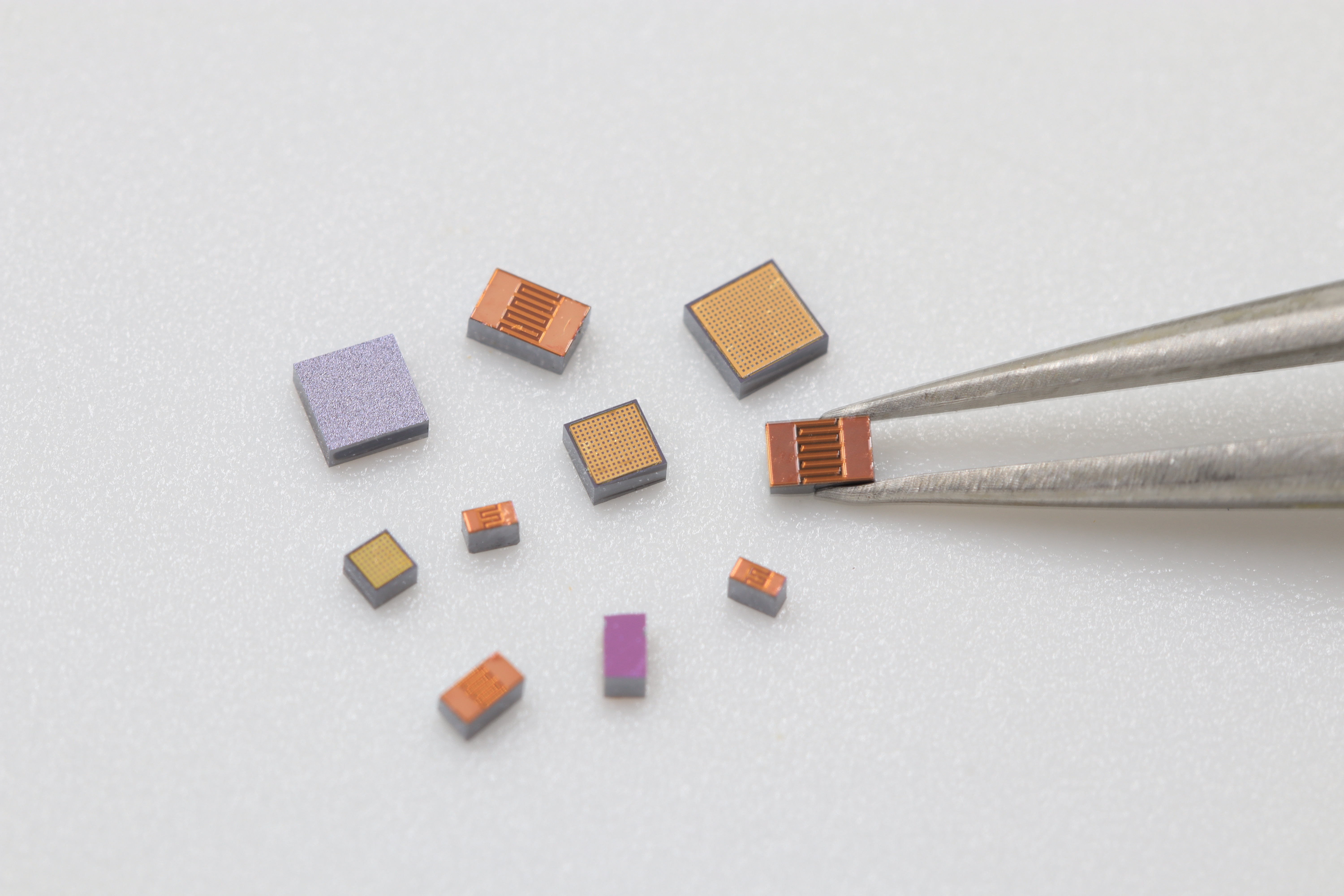
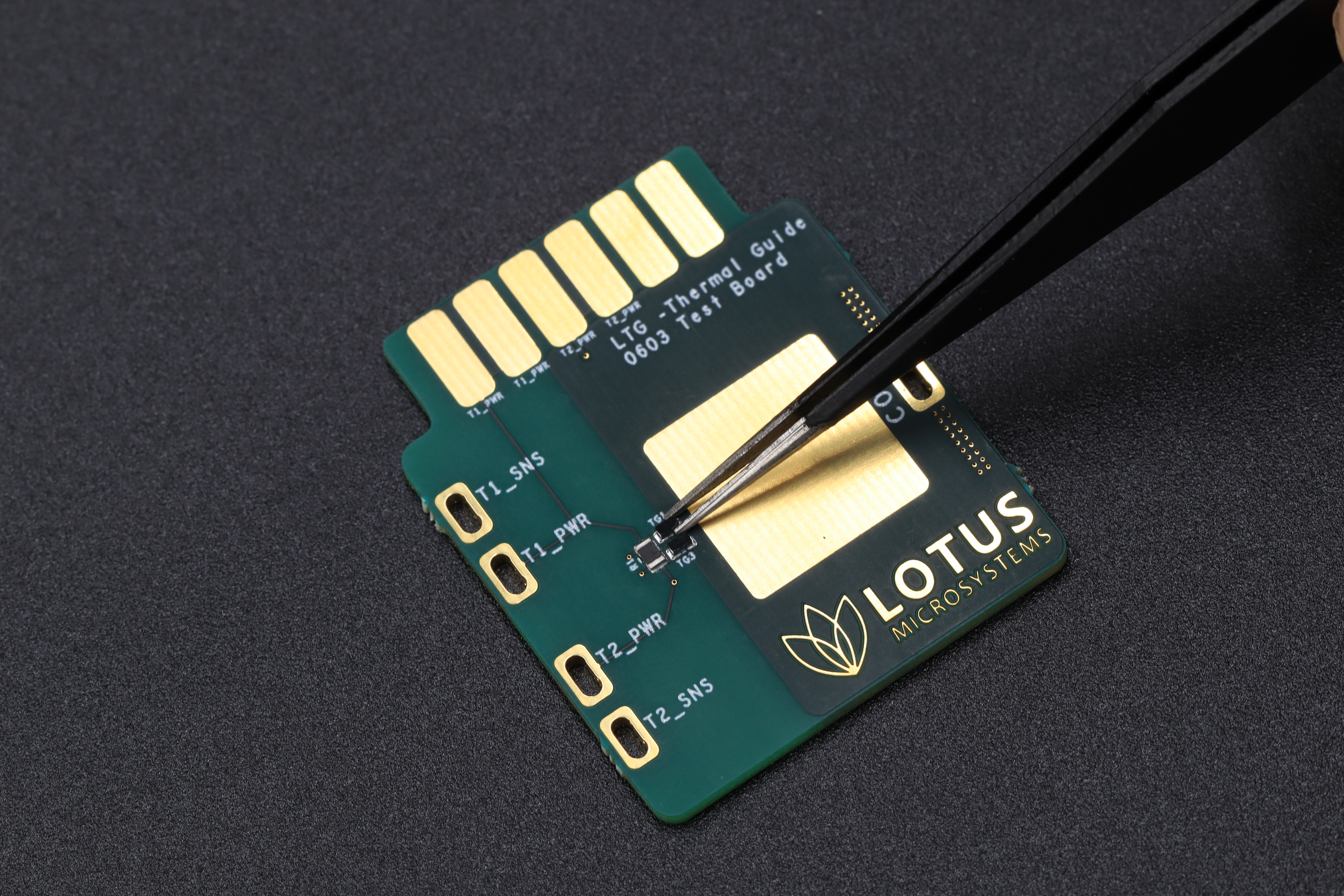
LTG devices from Lotus Microsystems are thermally conductive yet electrically isolated, silicon-based thermal jumpers. They are designed to guide heat away from hot electronic components, toward heat sinks or cooler areas (such as ground planes), without establishing an electrical connection. LTG devices significantly enhance thermal conductivity, particularly in scenarios with limited or no direct access to a ground plane or heat sink, such as high-side switch, current sense resistors, power inductors in SMPS and laser diodes Silicon, as an alternative to traditional ceramic materials, offers a cost-effective substrate with high thermal conductivity and excellent thermomechanical properties, as well as reliable manufacturing process. The incorporation of LTG devices both improves circuit reliability and reduces the overall cost of a thermal management system. They are currently available in five standard EIA sizes (0201, 0402, 0603, 0805, and 1206) as a later...


Lotus Microsystems
LTG devices from Lotus Microsystems are thermally conductive yet electrically isolated, silicon-based thermal jumpers. They are designed to guide heat away from hot electronic components, toward heat sinks or cooler areas (such as ground planes), without establishing an electrical connection. LTG devices significantly enhance thermal conductivity, particularly in scenarios with limited or no direct access to a ground plane or heat sink, such as high-side switch, current sense resistors, power inductors in SMPS and laser diodes Silicon, as an alternative to traditional ceramic materials, offers a cost-effective substrate with high thermal conductivity and excellent thermomechanical properties, as well as reliable manufacturing process. The incorporation of LTG devices both improves circuit reliability and reduces the overall cost of a thermal management system. They are currently available in five standard EIA sizes (0201, 0402, 0603, 0805, and 1206) as a lateral version (ST) and as a lateral/vertical one (CT), as well as custom versions.


Key Features


Offering Brief
Offering Brief
| Device Family | Agilex® 3 FPGA C-Series, Agilex® 5 FPGA D-Series, Agilex® 5 FPGA E-Series, Agilex® 7 FPGA F-Series, Agilex® 7 FPGA I-Series, Agilex® 7 FPGA M-Series, Agilex® 9 FPGA Direct RF-Series, Arria® 10 GT FPGA, Arria® 10 GX FPGA, Arria® 10 SX FPGA, Arria® II GX FPGA, Arria® II GZ FPGA, Arria® V GT FPGA, Arria® V GX FPGA, Arria® V GZ FPGA, Arria® V ST FPGA, Arria® V SX FPGA, Cyclone® 10 GX FPGA, Cyclone® 10 LP FPGA, Cyclone® II FPGA, Cyclone® III FPGA, Cyclone® III LS FPGA, Cyclone® IV E FPGA, Cyclone® IV GX FPGA, Cyclone® V E FPGA, Cyclone® V GT FPGA, Cyclone® V GX FPGA, Cyclone® V SE FPGA, Cyclone® V ST FPGA, Cyclone® V SX FPGA, MAX® 10 FPGA, MAX® II CPLD, MAX® II Z CPLD, MAX® V CPLD, Stratix® 10 AX FPGA, Stratix® 10 DX FPGA, Stratix® 10 GX FPGA, Stratix® 10 SX FPGA, Stratix® 10 TX FPGA, Stratix® III FPGA, Stratix® IV E FPGA, Stratix® IV GT FPGA, Stratix® IV GX FPGA, Stratix® V E FPGA, Stratix® V GS FPGA, Stratix® V GX FPGA |
|---|---|
| Offering Status | Production |
LTG020180CT
LTG040280CT
LTG060380CT
LTG080580CT
LTG120680CT
Documentation & Resources

Market Segment and Sub-Segments

Aerospace
View Sub-Segments
Consumer
View Sub-Segments
Data Center OEM (IHV, ISV, SI, VAR)
View Sub-Segments.svg?h=0&v=8a74a614-b7ba-4604-ad78-f0827c6a3874&itok=rVWXlOCO)
Defense
View Sub-Segments
Industrial
View Sub-Segments
Medical
View Sub-Segments
Transportation
View Sub-SegmentsTransportation
Automotive (Passenger Vehicles)
Charging Infrastructure
Non-Automotive Transportation
Transportation Infrastructure (non-charging)